
You have read this article before. Run a happy hour. Try a BOGO. Take twenty percent off on the slowest night of the week. And somewhere underneath that advice you have probably had the thought that never quite goes away: that every discount you run is teaching your best guests to wait for the next one.
That instinct is correct. It is also the reason most promotion advice fails the people reading it.
A restaurant promotion is any deliberate activity designed to give someone a reason to visit now rather than later. That includes offers and discounts, but it also includes events, collaborations, giveaways, classes and community appearances, and the last group is where most of the durable value sits. The restaurant promotion ideas in this guide are built around that second category: promotions that leave you with an audience, a partnership or a reputation once the night is over, rather than a smaller margin and a guest who now expects a deal.
People ask how to promote a restaurant without giving discounts. The short answer is that the promotions that work best are usually the ones guests would pay to attend.
We cover seven mechanisms — community events, collaborations, paid experiences, giveaways and contests, merch, street-level promotion, and influencer invites — across roughly twenty tactics. This is the build order our team at UADV uses when we plan a promotion calendar for a hospitality client, and it is written as a planning document rather than an inspiration list. Every tactic below closes with what it costs, how long it takes to organize, how much it demands of your floor during service, and how to tell whether it worked.
If you want the wider view of where promotions sit alongside search, social and paid, start with a broader restaurant marketing strategy and come back here for execution.
The difference between a promotion that builds a restaurant and one that drains it is whether the guest remembers the experience or only remembers the price.
That single distinction is the frame for everything below. A promotion is not a favor you do for guests. It is an investment with a return, and the returns come in different shapes. Some promotions return foot traffic that stops the day the offer ends. Others return something you keep: a contact list, a relationship with the brewery down the road, a reason people describe your restaurant to a friend.
To be clear about where discounting fits, a structured, time-boxed offer aimed at a genuinely dead daypart is a perfectly good tool, and sometimes it is the right one. A soft Tuesday lunch with a defined offer and an end date is a sensible use of margin. What causes damage is the standing version: the permanent happy hour that quietly cannibalizes full-price covers, the percentage-off promotion run out of anxiety in a slow month, the deal that never expires and slowly becomes the price. Use discounting deliberately, not reflexively.
Before committing to anything in this article, ask three questions. What is this promotion actually for, whether covers, new guests, or long-term recognition? Can the kitchen and floor absorb the volume if it works? And does it suit the concept, or are you borrowing a tactic from a restaurant that is nothing like yours? The answers change which of the tactics below are worth your time.
On a restaurant running a thin net margin, a 20 percent discount does not cost you 20 percent of your profit. It can erase the profit on that cover entirely.
Run it once, slowly, on your own numbers. Take a $50 average check. If your food and labor costs against that check leave you with a few dollars of net profit, which is a realistic picture for a lot of independents, then discounting the check by $10 does not trim that profit. It consumes it and keeps going. The costs underneath the check barely move, because the food is still cooked and the server is still on the floor.
The follow-on question is the one almost nobody calculates: how many additional covers does the promotion need to generate just to break even against the same revenue at full price? Work it out for your own check average before you run anything. Most operators have never seen that number, and it is frequently much larger than expected.
Then there is the cost that never appears in these articles. A meaningful share of redemptions come from regulars who were coming anyway. That is margin given away for a visit you already had. On an established restaurant with a loyal base, those redemptions are often the majority.
Compare that to the cost structure of an experience promotion. You spend a known amount up front, whether a guest chef’s travel, a stall fee or a print run, and the cost does not scale with every cover you sell. That fixed-versus-variable difference is the argument the rest of this article rests on.
Before you pick tactics, know which job you are hiring them for.
Fill a specific empty daypart. Short horizon, measured in covers, and the one job where a well-structured discount is genuinely competitive with everything else here.
Reach an audience you do not currently have. This is what collaborations, local events and influencer invites are for. Measure it in new guests, not total covers, or you will misread a successful promotion as a flat one.
Build brand equity, the reason someone picks you over the place next door. Slowest to pay back, hardest to measure, and the job that heavy discounting actively erodes.
Grow an audience you own, meaning the email list, the SMS list, the reservation database. This is the compounding one. Every promotion that captures contacts makes the next promotion cheaper, because you are no longer renting attention to announce it. Once you have those contacts, turn those contacts into repeat visits is a separate discipline worth learning properly.
Each tactic below is tagged with the job it does. Use those tags rather than picking on instinct.
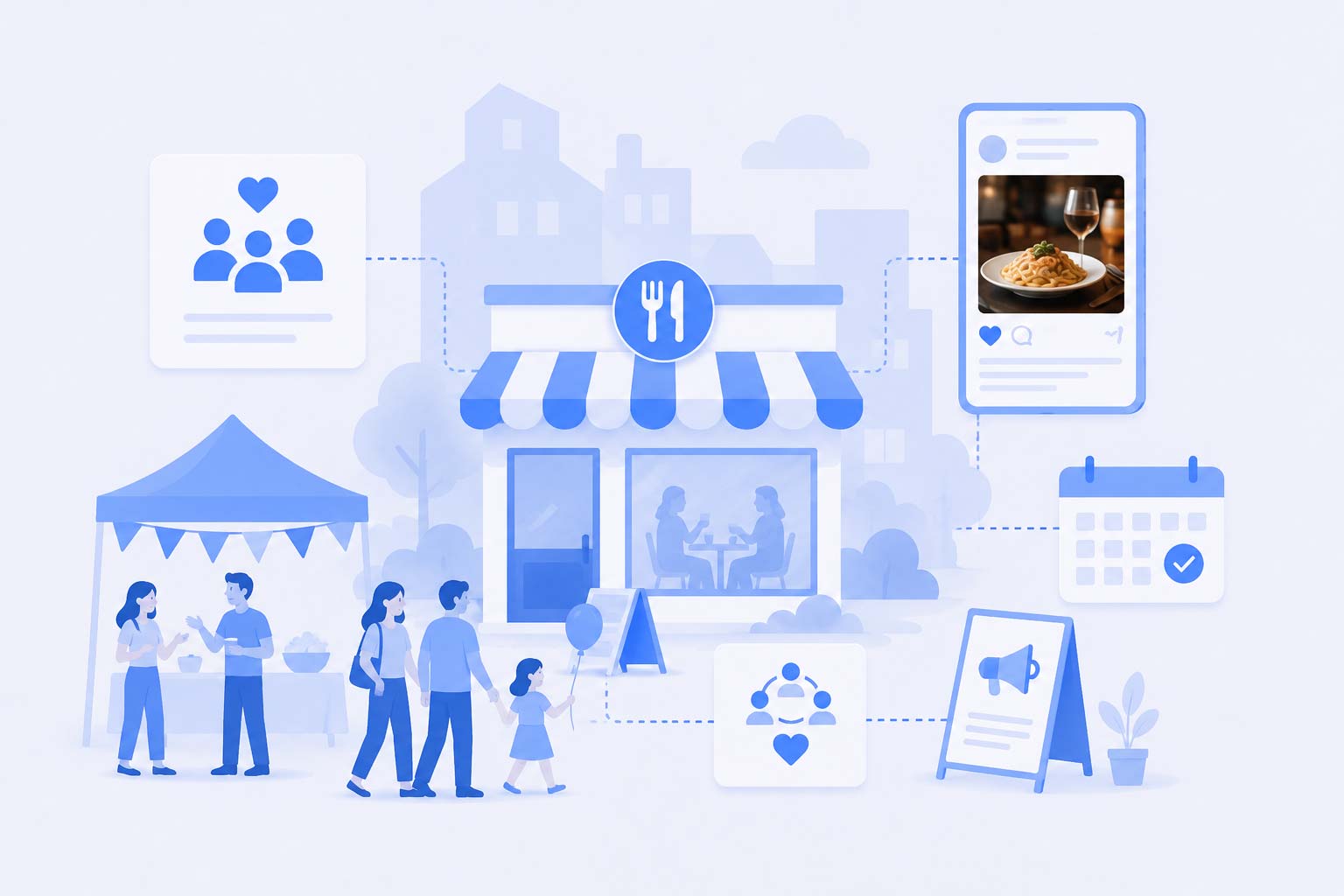
Community promotions work because they put the restaurant in front of people who are already out and already hungry, at a cost per impression no ad platform can match.
Be honest with yourself about the return shape here. These rarely produce a same-day revenue spike, and if you judge them on that you will stop doing them. What they produce is local recognition, accumulated over months, which is what turns a restaurant into the default choice within its own few blocks.
Operators sometimes resist this because it feels like charity wearing a marketing badge. The reach math answers that. A stall at a well-attended neighborhood market puts your brand, your name and your actual food in front of more genuinely local people than a month of boosted posts, usually for less money, and with a sample in their hand.
This mechanism is disproportionately strong for independents and disproportionately weak for chains, which is worth saying plainly: it plays directly to the advantage you already have. If you want the digital counterpart to this, hyperlocal marketing covers the same catchment from the other direction.
Job: reach a new audience, grow an owned audience
What you are buying at a food festival is sampling at scale to a pre-qualified crowd, meaning people who paid money and gave up a Saturday specifically to eat things they have not eaten before. Treat the goal as capture, not as same-day sales, and the economics make sense.
The operational reality is less romantic. A stall means pulling staff off the line, cutting your menu down to one or two items that travel and hold, and paying a fee or a revenue share for the privilege. Fees vary enormously by market and event size, from nominal at a neighborhood farmers market to a serious line item at a headline food festival.
The single most common mistake is attending without a capture mechanism. A QR code pointing to a birthday club or an early-access list turns a sampling day into list growth that pays out for years. Without one, you bought a day of sales and nothing else.
Choose events on three criteria: attendance, whether the audience is local or tourist, and whether directly competing concepts will be there. A tourist-heavy festival is poor value for a restaurant that lives on repeat neighborhood trade.
Cost: low to high, driven almost entirely by the stall fee. Lead time: 2 to 6 months; the good ones book out early. Staffing: two to three people off the line for a full day, plus prep. Measure: contacts captured and cost per contact, not stall revenue.
Job: reach a new audience, build brand equity
The mechanism is simple. You donate a percentage of one night’s sales to a local cause, and the cause promotes that night hard to its own list. You are buying access to a warm local audience with margin instead of cash.
This is one of the highest-yield community tactics available to a neighborhood restaurant, because schools, sports clubs and local charities have genuinely engaged mailing lists and a direct financial reason to promote. Their incentive is aligned with yours in a way an ad platform’s never is.
Structure it tightly. Pick a defined night rather than an open-ended offer. Agree a clear percentage. Give the organization a flyer or a link they can actually distribute, and put in writing who is responsible for promoting. That last point is the whole variable, because a partner who does not promote delivers you nothing, and you will have donated a percentage of a normal night for the privilege.
Choose the night carefully. Donating a percentage of sales on a quiet Tuesday costs a fraction of doing it on a Friday, and that choice is the difference between a smart promotion and an expensive gesture.
Cost: low in cash, moderate in donated margin. Lead time: 3 to 6 weeks. Staffing: normal service levels, though brief the floor. Measure: incremental covers against a comparable baseline night, plus contacts captured.
Job: reach a new audience, build brand equity
Most local sponsorships are donations wearing a marketing label. The difference between the two is whether the deal includes anything you can actually act on.
The highest-value clause is almost never requested: the right to host the post-event gathering. A logo on a jersey is the least valuable thing on the table and it is what most restaurants accept without asking for more. Negotiate instead for a table at the event, sampling rights, an email drop to the organization’s list, a code exclusive to members, or that post-event booking.
Match the audience to the daypart you need to fill. A youth sports team delivers families on weekends. A running club delivers a weekday-morning crowd. A local arts organization delivers evenings and a higher check. Sponsoring the wrong audience efficiently is still the wrong audience.
Cost: low to moderate, usually a fixed seasonal fee. Lead time: aligned to the season, so one to three months ahead. Staffing: minimal unless you host. Measure: covers attributable to the partnership and contacts captured.
Here is what most people don’t realize about collaborations. The point is not the event, it is that both parties promote it to audiences the other one does not have.
That single mechanic determines everything about how a collaboration should be structured. It is an audience trade. You get exposure to your partner’s customers, they get exposure to yours, and any collaboration that does not produce mutual promotion has failed regardless of how good the food was.
Which gives you the qualifying rule that saves a lot of wasted effort: the partner’s audience has to be one you actually want, and roughly comparable in size to yours. A wildly mismatched pairing is a favor flowing in one direction, not a collaboration.
Collaborations also throw off unusually good content as a by-product. Two kitchens working together, a limited menu, a named guest, and one event feeds social, email and local press simultaneously, which makes it one of the more efficient uses of a promotion budget you will find.
Job: reach a new audience, build brand equity
The format runs from small to ambitious. At the light end, a single collaborative dish on your menu for two weeks. At the heavy end, a one-night takeover where a visiting chef runs your pass. Start small. The collaborative-dish version delivers most of the audience trade with a fraction of the operational risk.
This is one of the strongest promotions available to an independent for three reasons. It creates genuine scarcity, which normal service cannot. It generates local press interest, which normal service also cannot. And it gives your own kitchen team something to be excited about, which matters more for retention than most operators account for.
Agree the structure before anyone starts cooking: the menu split, the cost split, who covers the visiting chef’s expenses, whether access is ticketed or reservation-only, and, non-negotiably, that both parties promote to their own audiences on an agreed schedule. That clause is the entire value of the deal.
Sourcing is where most operators stall. Start with chefs at non-competing concepts in your own city, with suppliers who work across several kitchens and know who is looking, and with local culinary networks and alumni groups.
Cost: moderate; visiting chef costs plus ingredient overrun. Lead time: 6 to 12 weeks. Staffing: heavy on the night, plus prep days. Measure: covers, average check versus a normal night, new guests, and press or social pickup.
Job: reach a new audience, fill a daypart
In practice this is a limited menu item or cocktail built with a local roaster, brewery, distillery, bakery or farm, promoted by both sides, available for a defined window.
Local beats national almost every time. A national brand brings recognition but no local audience and a procurement process measured in quarters. A local producer brings an engaged local following and can agree the whole thing on a phone call this week.
Make sure the reciprocity is real, or the partner will not promote. Stock their product. Name them in the menu description. Tag them consistently. Host a tasting for their customers. A collaboration that only benefits the restaurant gets a single polite repost and nothing else.
The operational advantage here is the reason it belongs in every calendar: a collaboration menu item requires no additional staffing on the night. It runs inside normal service. That makes it the lowest-friction tactic in this entire article and the obvious thing to run continuously underneath your bigger promotions.
Cost: low; ingredient cost and menu print. Lead time: 2 to 4 weeks. Staffing: none beyond normal service. Measure: units sold, incremental average check, and reach from the partner’s promotion.
Job: fill a daypart, reach a new audience
The businesses within a few blocks of you already share your customers, and almost none of them have ever been asked to trade traffic.
Skip the vague “partner with local businesses” advice and use concrete structures. A pre-theater menu with the venue down the street. A post-appointment offer with the salon or the gym. A stamped card between a morning coffee shop and a dinner restaurant with opposite peak hours.
That last example points at the actual selection criterion, which is complementary hours. Your best cross-promotion partner is busy exactly when you are quiet, because their overflow is your opportunity. Partnering with a restaurant that peaks when you peak achieves nothing for either of you.
These arrangements usually cost nothing, but they need a physical or digital artifact to survive. A card, a code, a stack of flyers by the register. Without one, both sides forget the arrangement exists within two weeks.
Cost: minimal; printing only. Lead time: 1 to 3 weeks. Staffing: none. Measure: redemptions, which is the one tactic here where a trackable code genuinely is the right instrument.
The strongest restaurant promotions are the ones guests pay for. A cooking class, a tasting dinner or an off-menu night generates revenue on the night instead of costing margin.
That inversion makes this the most important section in the article. Every other mechanism here spends money to acquire attention. A paid experience is a promotion that funds itself, frequently profits, and still does the brand and audience work that a discount cannot.
The second benefit is capacity. A Monday afternoon cooking class or a Sunday evening tasting uses a room and a kitchen brigade that were going to sit idle. You are converting dead capacity into revenue and marketing simultaneously.
This is also what experiential marketing for restaurants means in practice, not a stunt, but a format where the promotion and the product are the same thing. Which raises the failure mode that ends this section: pricing it wrong.
Job: reach a new audience, fill a daypart, grow an owned audience
Three formats worth considering, in ascending order of difficulty. A demonstration evening where a chef cooks and the room watches, then eats. A cocktail or wine workshop run by your bar team. A hands-on class where guests work stations themselves. Demonstration formats are dramatically easier to staff than hands-on ones, and most restaurants should start there.
Be realistic about requirements, because this is where enthusiasm meets the floor plan. You need a class size cap, equipment and station setup, an insurance and licensing check, and, the one people forget, a staff member who can genuinely teach. A brilliant cook who cannot hold a room will sink the format.
Price it as an event, not as a meal with a lesson attached. The ticket has to cover ingredients, labor including prep and setup, and a real margin, with wine or an added course as the upsell.
Worth knowing: classes attract a noticeably different demographic from normal service, including a lot of people who have never eaten at your restaurant. That makes this an acquisition channel as much as a revenue line.
Cost: moderate; ingredients, equipment, instructor hours. Lead time: 4 to 8 weeks. Staffing: two to three, dedicated. Measure: ticket revenue against cost, plus how many attendees return as normal guests within 90 days.
Job: build brand equity, grow an owned audience
Scarcity is the whole mechanism. A one-night, reservation-only, capped-covers format converts curiosity into an actual booking, because the guest cannot postpone it to a vaguer future date.
There is a second benefit competitors consistently miss. This is the cheapest possible way to test menu items on real paying guests before you commit them to a printed menu and a supply chain. You are getting product research funded by the people doing the research.
Make access the incentive rather than price. Invitation-only, email-list-first booking, or a limited allocation held back for regulars makes your best guests feel recognized, which produces a retention effect stacked on top of the night’s revenue.
The honest prerequisite nobody states: this format works beautifully for restaurants with an existing email list and badly for those without one. If you have no list, run the community tactics above first, capture contacts, and come back to this.
Cost: low to moderate; ingredient cost against ticket revenue. Lead time: 3 to 6 weeks. Staffing: normal to heavy depending on format. Measure: covers, average check versus a standard night, and repeat bookings from attendees.
Cost the ingredients, then the labor hours including prep and setup, then the opportunity cost of any covers you displace by closing the room. Add a real margin on top. Do not price to break even and call the marketing value the profit.
The most common error is specific and worth naming: restaurants price experiences like a slightly expensive dinner. That ignores the preparation and instruction labor that has no equivalent in normal service, which is exactly the labor that makes the format expensive to run.
Deposits are not optional. A capped experience with three no-shows loses money that cannot be recovered, because you turned away the bookings that would have filled those seats. Take prepayment or a meaningful deposit as standard.
A well-priced experience should be profitable on its own terms. The marketing value, meaning the new guests, the content and the reason people talk about you, is a bonus on top, not a justification for running it at a loss.
The short answer is that most restaurant giveaways fail because they are designed to maximize entries rather than to attract people who will actually come back.
Entries are not the goal. Qualified local entries are. A giveaway that pulls in a national audience of competition hunters produces a spike in follower count, a bump in engagement, and precisely zero covers.
The prize principle follows directly: the prize should only be desirable to someone who would realistically eat at your restaurant. A dinner for four is a good prize because it is worthless to anyone outside driving distance. A generic gift card or a piece of consumer electronics is a bad prize for exactly the same reason it looks appealing, which is that everyone wants it.
Framed correctly, giveaways are the cheapest list-building mechanism available to a restaurant. That list is the actual return, not the social engagement everyone reports on.
Job: grow an owned audience, reach a new audience
Entry mechanics select for different things, so choose deliberately. Tagging a friend grows reach. Following grows audience. An email entry grows a list you own. An in-person entry filters hard for people who are genuinely local. The combination worth defaulting to is an email capture with a local qualifier attached.
Use a partner to multiply it. A joint giveaway with a complementary local business roughly doubles reach while halving your prize cost, and both audiences are already in your catchment.
Time it deliberately. Short entry windows create urgency, and running the giveaway so it lands against a slow period or a launch converts the attention into covers. A giveaway that peaks three weeks before you have anything to visit for converts into followers and nothing else.
Then do the part almost every restaurant skips. Everyone who entered and did not win is a warm local contact who just told you they want to eat your food. A consolation offer to that group is routinely worth more than the giveaway itself, and it costs one email. This is the point where a giveaway stops being a social stunt and becomes list-building, and turn those contacts into repeat visits explains what to do with them next.
Cost: low; prize cost only. Lead time: 2 to 3 weeks. Staffing: minimal. Measure: qualified local contacts captured and cost per contact, never entries or follower growth.
A promotion that requires a purchase to enter and awards prizes by chance can constitute an illegal lottery in many US states, and most restaurants running giveaways have never considered this.
The distinction that matters is between a sweepstakes and a contest. A sweepstakes is decided by chance and therefore requires a free method of entry, which is precisely why “no purchase necessary” exists as a phrase and why it appears on every legitimate promotion you have ever seen. A contest is decided by genuine skill and judged against stated criteria, which is a different legal animal.
In practice, running either one cleanly tends to involve published official rules, clearly stated eligibility and dates, a stated prize value, and awareness that some states impose registration or bonding requirements above certain prize thresholds.
Platform rules are a separate obligation that sits on top of the law. Social platforms impose their own promotion requirements, typically including an acknowledgment that the platform is not involved in or endorsing the promotion. These change more often than the law does, so check them each time rather than reusing last year’s terms.
None of this is legal advice, and this article is not a substitute for it. For anything above a nominal prize value, have a qualified attorney look at your rules before you post.
Job: reach a new audience, build brand equity
A UGC promotion asks guests to post about a real experience in exchange for recognition or entry, and it works because content made by a guest is more persuasive than anything your team can produce.
Give people something worth posting. A dish that genuinely photographs well. A hashtag tied to a limited menu rather than a permanent one. A wall, a light, a detail people stop at. A monthly feature of the best guest photo, with the guest credited.
Two boundaries to respect. Reposting guest content requires permission, and asking takes one comment. And a promotion whose terms claim broad perpetual rights over guest images will visibly suppress participation. Keep it simple.
There is also a disclosure line worth understanding, and it connects directly to the next section. A guest who posts voluntarily about a meal they paid for has nothing to disclose. The moment you provide anything of value in exchange for a post, disclosure obligations attach.
Cost: minimal. Lead time: 1 to 2 weeks. Staffing: ongoing light monitoring. Measure: usable content pieces generated and their reach, plus any capture attached to entry.
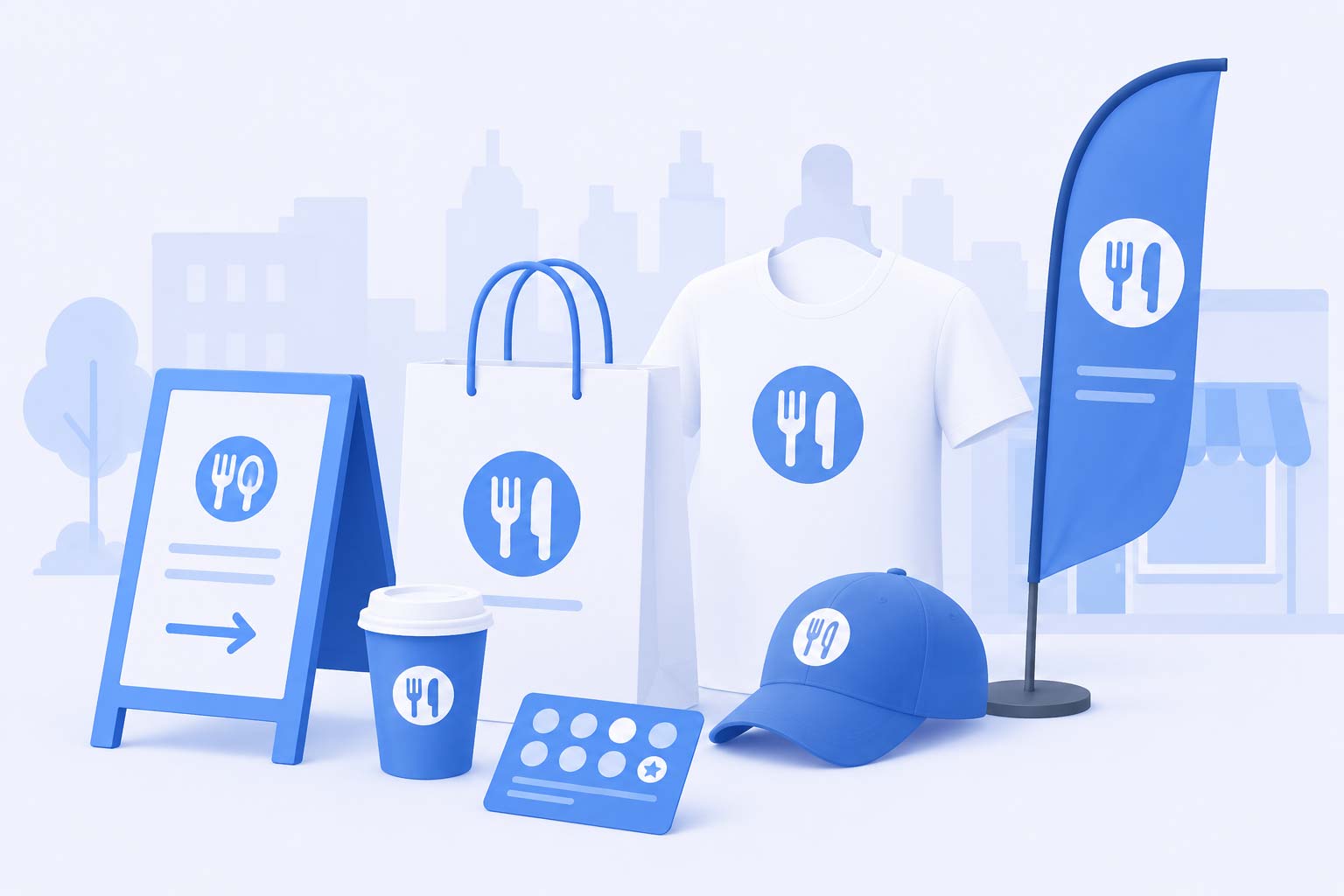
Merch stops being marketing and becomes inventory the moment it stops selling. The difference is whether guests actually want to wear it.
These two tactics belong together because they share a mechanic. Both put your brand into physical space, and both get dismissed as dated by people who have not looked at the numbers for a single-location restaurant. They are also, candidly, the two mechanisms on this list most likely to waste money when executed badly. Read the failure conditions before the tactics.
Job: build brand equity
Merch works when the design is good enough that someone would buy it without any particular loyalty to your restaurant. It fails when it is your logo on a blank shirt, and that failure is expensive because minimum order quantities mean you paid for all of it up front.
Think in break-even terms rather than revenue terms. Unsold stock is a cost with a storage problem attached. Start with a small run or a print-on-demand test to find out whether anyone wants it before you commit capital.
What actually sells for restaurants: caps, tote bags, aprons, house hot sauce or a signature condiment, branded glassware. Consumable branded goods outperform apparel for most independents, because the purchase decision is much smaller and the item does not have to fit.
Evaluate it on both returns. A tote bag that breaks even financially while circulating your name around the neighborhood for two years has done its job completely, even though the P&L shows nothing.
Cost: moderate to high up front; minimum order quantities dominate. Lead time: 6 to 10 weeks including design and production. Staffing: minimal; retail space and a payment path. Measure: sell-through rate against the order quantity, and margin per unit after the minimum order.
Job: fill a daypart
Print still works for restaurants specifically because the catchment is small, physical and walkable, which is the exact condition under which digital targeting is least efficient. You are trying to reach people within a ten-minute walk, and that is a hard audience to buy online without paying for enormous waste.
Formats do different jobs. Door drops into a defined residential radius build dinner trade. Counter cards at partner businesses catch their traffic. Menu drops into nearby offices build lunch. Inserts at a hotel concierge desk reach visitors with no fixed plans.
What makes a restaurant flyer work is not design advice, it is discipline. One offer or one reason to visit, your address with a map cue because local recognition matters more than a URL, and an expiry date that creates urgency and makes tracking possible.
The office lunch drop is the highest-return print tactic for any restaurant near commercial density, and it is almost never done well. A targeted drop into three nearby buildings with a lunch-specific offer routinely outperforms a residential drop ten times its size.
Measurement is print’s genuine weakness. A unique code or a physical voucher is the only reliable instrument. Without one, the spend is unmeasurable and you should budget it as brand investment rather than pretending otherwise.
Cost: low to moderate; design plus print plus distribution. Lead time: 2 to 4 weeks. Staffing: minimal if distribution is outsourced. Measure: code redemptions or voucher returns.
Job: fill a daypart, reach a new audience
Putting the actual food in front of people within walking distance is the highest-conversion promotion a restaurant can run, because the product is the pitch. Nothing you write about your food competes with someone tasting it.
The formats: sampling outside your own venue at peak footfall, a stall at an office building or transit hub, a branded cart, or an arrangement with a nearby business to sample to their line.
Permissions matter and vary. Sampling on public land generally requires local authorization, and sampling on private property requires the owner’s permission. Check before you set up, not after someone asks you to leave.
The capture requirement applies here more than anywhere. Sampling without a card, a QR code or an attached offer converts a taste into a pleasant memory and nothing else. Attach something.
One timing insight worth building into the plan: sampling works best immediately before the daypart you want to fill, not at a random convenient hour. Sampling at 4pm to fill a 6pm service is a fundamentally different tactic from sampling at noon, and the two should not be confused.
Cost: low to moderate; food cost plus labor plus any permit. Lead time: 2 to 4 weeks including permissions. Staffing: two people for a session. Measure: conversion from sample to same-week visit, tracked through the attached offer.
The difference between a micro and a macro influencer invite is that one buys you local diners and the other buys you awareness, and most restaurants pay for the wrong one.
For a single-location restaurant, a creator with a genuinely local following of a few thousand is worth more than a national food account with hundreds of thousands, for a reason that is almost too obvious to state: a follower who cannot drive to your restaurant cannot become a guest.
Macro invites are justified in specific circumstances, including a launch, a new location, a group building regional recognition, or a concept with real destination appeal that people will travel for. Outside those, you are buying impressions you cannot convert.
This section covers the invite mechanic specifically. For platform-level tactics, posting cadence and content strategy, social media marketing for restaurants covers that ground properly.
Job: reach a new audience
Micro creators, roughly one to fifty thousand followers, buy you local reach, high engagement and a recommendation that reads as credible because it usually is. Cost is frequently a comped meal rather than a fee. This is the correct default for a single-location independent.
Macro creators, above roughly a hundred thousand, buy awareness, production quality and content you can reuse. They cost real money. Justified at launch or for a destination concept.
Vet on things other than follower count. Where does the audience actually live? What is the engagement rate, not the reach? Did their previous restaurant posts produce visible response, meaning comments from people saying they went? Does their audience match your price point, or are you paying to reach people for whom your restaurant is a special occasion at best?
One clause most restaurants never ask for: the right to reuse the creator’s content in your own paid ads. That reuse is frequently worth more than the original post, because you now own a piece of high-performing creative, and it usually costs very little to negotiate in.
Cost: comped meal to a real fee depending on tier; varies widely by market. Lead time: 2 to 4 weeks. Staffing: normal service, briefed. Measure: reservations or code redemptions in the two weeks after posting, plus content assets acquired.
An unstructured comped meal produces nothing reliably. The fix is a written agreement covering deliverables before the visit, rather than a hopeful invitation and a free dinner.
Specify how many posts and in what format, the timeline for posting, whether you get approval rights or reuse rights, exactly what is comped and what is not, and whether they may bring a guest. Every one of those becomes an awkward conversation if left unstated.
Then handle the operational side, because it determines whether the content is any good. The kitchen and floor should know the visit is happening. Book it into a service that can absorb the attention rather than a Saturday at eight. Steer toward the dishes that photograph well, not dishonestly, just deliberately.
Start with creators who have already visited and posted organically. They have demonstrated genuine affinity, their audience has already seen them endorse you once, and they convert at a far higher rate than cold outreach.
Set expectations honestly with yourself. Results vary widely, a single post rarely produces a measurable spike, and this works as a repeated program over months rather than as a one-off.
If a restaurant gives anyone anything of value in connection with a post, that material connection must be disclosed clearly and conspicuously, and the restaurant shares responsibility for a failure rather than the creator carrying it alone.
The FTC has addressed this scenario for restaurants directly. Inviting people to a free meal at an opening and hoping they post about it is exactly the situation the guidance covers. A disclosure is expected, and “we didn’t ask them to post” is not the exemption operators assume it is.
In practice, a compliant disclosure is in plain language at the start of a caption or in the opening moments of a video. Not buried after fifteen hashtags. Not left to a platform’s built-in toggle alone.
The enforcement reality is the part worth remembering. Businesses that direct, finance or benefit from an endorsement share liability, and pointing at the creator is not a defense. Read the FTC’s disclosure guidance and its Endorsement Guides directly rather than relying on secondhand summaries, including this one. This section is operator awareness, not legal advice.
The pattern we see across hospitality accounts is not the one operators expect. The restaurants that get results from promotions are rarely the ones with the best ideas. They are the ones running a calendar. An isolated promotion produces an isolated spike; a sequenced calendar compounds, because each promotion feeds the next one an audience.
Food and hospitality is UADV’s lead vertical, the agency is a Forbes Agency Council member, and we publish a full guide to marketing a restaurant online for operators who want the wider channel picture. Our promotion planning starts from a client’s own trading data, meaning which months are genuinely soft, which dayparts are structurally weak, and what the average check does across the week, rather than from a list of tactics.
It is worth being direct about what we talk clients out of, because a section that only recommends reads as a pitch. We routinely advise against standing discounts of any kind, because they reset price expectations permanently and are extraordinarily hard to withdraw. We also advise against merch as a first promotion for a restaurant without an established local following, because it ties up capital in inventory before there is demonstrated demand for the brand on a shirt.
If you have reached the point of evaluating outside help, choosing a restaurant marketing agency covers what to ask.
Most promotions in this article cannot be tracked with a redemption code. That is exactly why operators default to discounting, because it is the one tactic that measures itself. That is a measurement problem, not a conclusion about strategy, and treating it as a conclusion is how restaurants end up discounting by accident.
The practical alternatives are all available to you. Compare covers against a matched baseline period. Track new-guest counts rather than total covers. Count contacts captured. Ask at the point of booking or seating, which sounds primitive and works.
Baseline comparison is the workhorse, so do it properly. Compare against the same weekday across the preceding several weeks, not against last week. Account for weather, local events, holidays and seasonality before you claim a result. A 20 percent lift on a night the weather was good and a festival was two blocks away is not a 20 percent lift.
The one measure that unifies everything here is contacts captured per promotion. It applies to every tactic in this article, it takes no infrastructure to count, and it is the direct input to the compounding effect that makes next year cheaper than this one.
Some promotions genuinely cannot be measured cleanly. Budget those as brand investment with a defined ceiling, and stop pretending a number exists.
Plan against your own trading pattern, not against the calendar of holidays. The point is to fill the months that are genuinely soft for your restaurant, which may have very little to do with which months are soft in general.
A realistic cadence is roughly one significant promotion a month, with the low-friction tactics like collaboration menu items and cross-promotions with neighbors running continuously underneath, because they require no additional staffing and no additional attention.
Lead time is the real constraint, and it is the practical reason most calendars never happen. Festivals book months ahead. Guest chefs need weeks of coordination. Merch has production lead times. Print needs design and distribution windows. A calendar built in January is the difference between running these promotions and talking about running them in December.
Sequence them so they feed each other. A community event captures contacts. The email list gets first access to the tasting night. Attendees at the tasting night become the audience you announce the next collaboration to. Each promotion should make the next one cheaper to fill.
Seasonal moments like Valentine’s Day, Mother’s Day and the December stretch belong on that calendar, but they are covered in depth in our guide to seasonal and holiday campaigns rather than here.
You have just been handed around twenty tactics and you cannot run twenty. Pick two or three, and pick them against the four jobs from the start of this article rather than against which ones sound most enjoyable.
A reliable starting combination is one promotion that captures contacts, one that reaches a new audience through a partner, and one that generates revenue on the night. That covers acquisition, audience and cash flow at the same time, and it is roughly a quarter’s worth of work for a restaurant without a dedicated marketing person.
The best restaurant promotion ideas are the ones that leave you with something afterward, whether a contact list, a partnership, a reputation, or a piece of content you can run as an ad for the next six months. In summary, the strongest restaurant promotions give guests a reason to visit that has nothing to do with price, and leave the restaurant with an audience it keeps.
If you want that mapped against your own soft months rather than assembled from a list, book a strategy session with UADV and we will build a promotion calendar around your actual trading pattern. If you would rather start on your own, our guide to marketing your restaurant online is the lower-commitment place to begin, and restaurant SEO covers the channel that makes every promotion above easier to fill.
One last thing worth saying. The restaurants that become neighborhood institutions rarely got there with a discount. They got there by being at the market every Saturday, collaborating with the brewery down the road, and giving people something worth photographing. That takes longer, and it is the part nobody can copy.
What is a restaurant promotion?
A restaurant promotion is any deliberate activity designed to give someone a reason to visit now rather than later. That includes discounts and special offers, but also events, collaborations, giveaways, classes and community appearances. The strongest promotions give guests a reason to visit that has little to do with price.
How can I promote my restaurant without giving discounts?
Focus on promotions that create an experience or reach a new audience rather than lowering the price of what you already sell. Guest chef collaborations, cooking classes, ticketed tasting nights, local food events and partnerships with nearby businesses all bring people in without touching your margin. Several of them generate revenue on the night instead of costing it.
Do restaurant promotions hurt profits?
They can, if discounting becomes the default. On a thin net margin a percentage off can consume the profit on that cover, and a share of redemptions always comes from regulars who were visiting anyway. A structured, time-boxed offer aimed at a genuinely dead daypart is still a sensible tool. The problem is the standing discount that never expires and slowly becomes your price.
Do restaurant giveaways actually work?
They work when the prize only appeals to someone who would realistically dine with you, and fail when it appeals to everyone. A dinner for four attracts local diners; a generic gift card attracts competition hunters who will never visit. Measure a giveaway on qualified local contacts captured rather than on entries or follower growth.
How much does it cost to work with a food influencer?
Micro creators with a few thousand local followers will often visit in exchange for a comped meal, while larger accounts charge fees that vary widely by market and audience size. For a single-location restaurant, a creator whose followers live within driving distance is usually worth more than a national account with far greater reach. Agree deliverables in writing before the visit rather than hoping for a post.
Do I have to disclose when I give an influencer a free meal?
Yes. If you give anyone anything of value in connection with a post, that connection must be disclosed clearly and conspicuously, and the FTC has published guidance covering restaurants that invite people for free meals specifically. Businesses that direct, finance or benefit from an endorsement share responsibility when disclosure fails, so pointing at the creator is not a defense. Check the FTC Endorsement Guides for current requirements.
How does UADV decide which promotions a restaurant should run?
UADV starts from the restaurant’s own trading pattern rather than from a list of ideas, identifying which months and dayparts are genuinely soft and planning backward from there. Promotions are then sequenced so each one feeds the next, with contacts captured treated as the shared measure across every tactic. Food and hospitality is the agency’s lead vertical, and calendars are built around lead times most operators underestimate.
.webp)
Our team will compare you to your biggest competitors in your industry across multiple points from SEO to social media so you can find strengths & weaknesses in your business.


