
Ask ten consultants how to increase restaurant sales, and you will get ten different checklists. Strip away the noise, and only four things can move the number: more guests, a higher average check, more frequent visits, or less margin leaking out the back door. Every tactic worth your time ladders up to one of those four levers.
Most owners reach for an ad campaign or another round of Instagram posts first. Fair instinct, wrong sequence. The highest-ROI moves usually cost very little and live inside your four walls. People often ask, “How can a restaurant increase sales without spending more on advertising?” The short answer: fix the lever that is leaking before you pour money into the one that is fine.
This guide draws on UADV’s work with restaurants and hospitality groups, one of the agency’s lead verticals. Below you will find 12 operator-tested tactics organized by lever, a 60-second diagnostic to tell you where to start, and a realistic look at what execution takes.
The difference between restaurants that grow and restaurants that stall is sequencing. Growing operators fix the leaking lever first. Stalled operators chase every tactic at once and wonder why nothing compounds.
Here is the whole model in one line: sales = guests x average check x visit frequency, minus whatever leaks out through waste, comps, and slow tables.
The stakes keep climbing. The National Restaurant Association projects industry sales will reach $1.55 trillion in 2026, while the USDA’s Food Price Outlook forecasts menu prices (food away from home) rising 3.6% this year, faster than the historical average. Guests are paying more and expecting more, which punishes a sloppy operation twice.
Run this 60-second self-diagnostic before you spend a dollar trying to increase restaurant sales:
The next four sections tackle one lever each. Read the one your diagnosis points to first.

Here is what most operators miss: more guests does not have to mean more ad spend. Local search, referrals, and smart programming routinely beat paid campaigns on cost per cover, and they keep compounding after the budget stops.
Paid acquisition still has a place. When you are ready for that side, UADV’s guides to restaurant marketing strategy and paid social for restaurants cover it in depth. This section stays focused on how to increase restaurant sales without advertising.
An optimized, review-rich Google Business Profile is the closest thing to a free ad. It puts you in the map pack at the exact moment a nearby diner searches “restaurants near me,” which is when the decision actually gets made.
The moves that matter, as of June 2026:
For a Hollywood or Fort Lauderdale spot, owning “tacos in Hollywood FL” beats losing citywide for “best restaurant Miami” every time. For the deep technical version, see UADV’s guide to restaurant local SEO.
Word-of-mouth is the cheapest acquisition channel you have, and it is engineerable. Luck has very little to do with it.
Three plays work over and over: a simple “bring a friend” incentive with a real reward, a signature dish or dessert built to be photographed, and servers trained to ask a visibly happy table for a Google review while the goodwill is still warm. A referred guest costs almost nothing to acquire, which makes referrals a traffic tactic that quietly protects your margins too. If you have been wondering how to get more customers in a restaurant without writing checks to a platform, this is the place to start.
You rarely need more covers at 8pm on Saturday. You need covers on Tuesday at 6. Once fixed costs are paid, those quiet-hour seats are close to pure margin.
Programming that pulls demand into dead hours includes themed nights, live music, prix-fixe industry nights, private buyouts, and standing partnerships with nearby offices and hotels. The same playbook answers how to increase lunch sales in a restaurant: give the workers within a ten-minute walk a fast, fixed-price lunch they can count on, and they will build it into their week.

The short answer to flat revenue in a full room is average check. Raise it by even $4 a guest and the math gets exciting: at 600 covers a week, that works out to roughly $125,000 a year without a single new guest walking in.
For most full-service restaurants, this is the highest-leverage, lowest-cost way to increase restaurant sales, because it works on demand you already have.
Menu engineering means designing your menu so the most profitable dishes are also the easiest to choose. It is the quietest lever in the building and often the most profitable.
Start with your stars, the dishes that are both high-margin and popular. Give them the best visual real estate, a box, or a short evocative description. Drop the dollar signs from your prices. Use one premium anchor dish to make mid-priced items feel reasonable. Then prune the laggards that clutter the page and slow down the kitchen.
Suggestive selling done well feels like hospitality. “The branzino pairs beautifully with this Italian white” lands very differently than “do you want a drink?”
Give servers real scripts for appetizers, premium swaps, beverages, and dessert. Run pre-shift tastings so they can describe specials with conviction instead of reciting them. Then reward the behavior you want, even if the prize is small. Drinks and dessert carry the strongest margins in the building, so this is exactly where check-building and margin protection overlap.
Bundles raise perceived value while lifting the ticket. A $55 three-course prix-fixe can beat a la carte ordering on guest satisfaction and check size at the same time.
Date-night packages, family bundles, beverage pairings, and “make it a meal” add-ons in your online ordering flow all do the same job. The online version has one advantage your floor staff will envy: the automated upsell never has an off night.
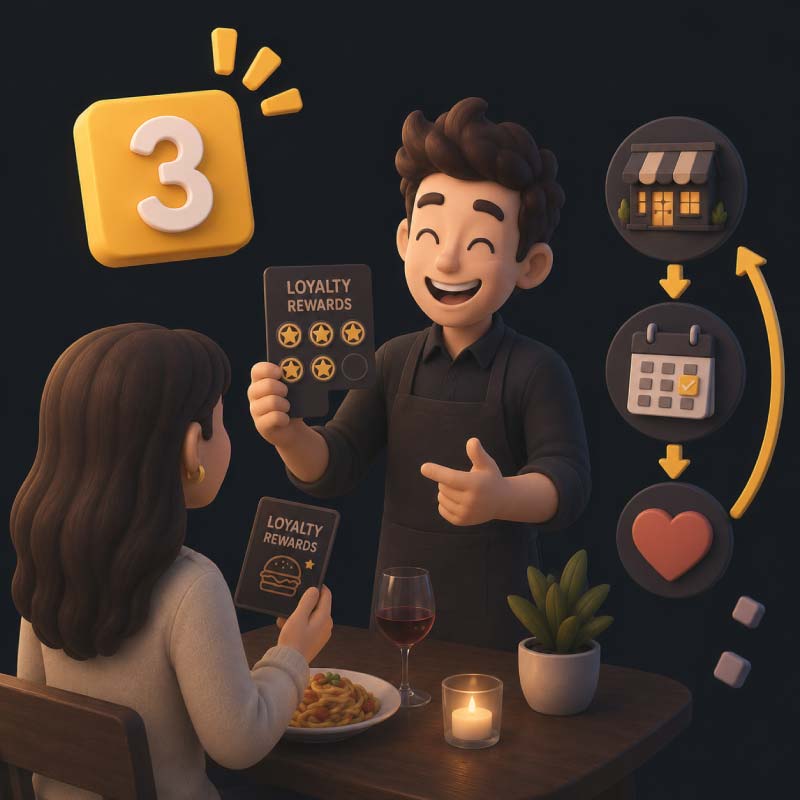
A regular who visits twice a month is worth more than ten one-time tourists, and far cheaper to keep. The cheapest way to increase restaurant sales is to re-sell the people who already like you.
Retention is the compounding lever. Small frequency gains across your existing base quietly outgrow the constant chase for new faces.
The best loyalty programs are simple, instantly rewarding, and tied to data you can act on. A punch card forgotten in a wallet fails all three tests.
As of June 2026, the practical setup is digital loyalty tied to your POS with automatic enrollment at checkout. Layer in surprise-and-delight perks, since an unexpected dessert beats a predictable 10% off, plus birthday and anniversary triggers that give guests a reason to book a specific date.
The guest list you own beats the audience you rent. Email and SMS reach the inbox without an algorithm deciding who sees it.
Capture contacts at reservation and checkout. Segment by visit behavior, even crudely: new, regular, lapsed. Send timed win-back offers to anyone who has gone quiet for 60 days. Building these retention systems is core agency work at UADV, and we cover what that looks like further down.
Delivery is a frequency channel. It captures the visit you would otherwise lose to a night on the couch.
Three priorities if you want to increase restaurant delivery sales: push first-party online ordering so you keep more of each dollar, optimize the menu for travel (some dishes should stay dine-in only), and treat third-party apps as acquisition that introduces new guests you then convert into direct customers. Commission structures on the major platforms change often and can take a meaningful share of every order, so verify current terms before you build a strategy around them.
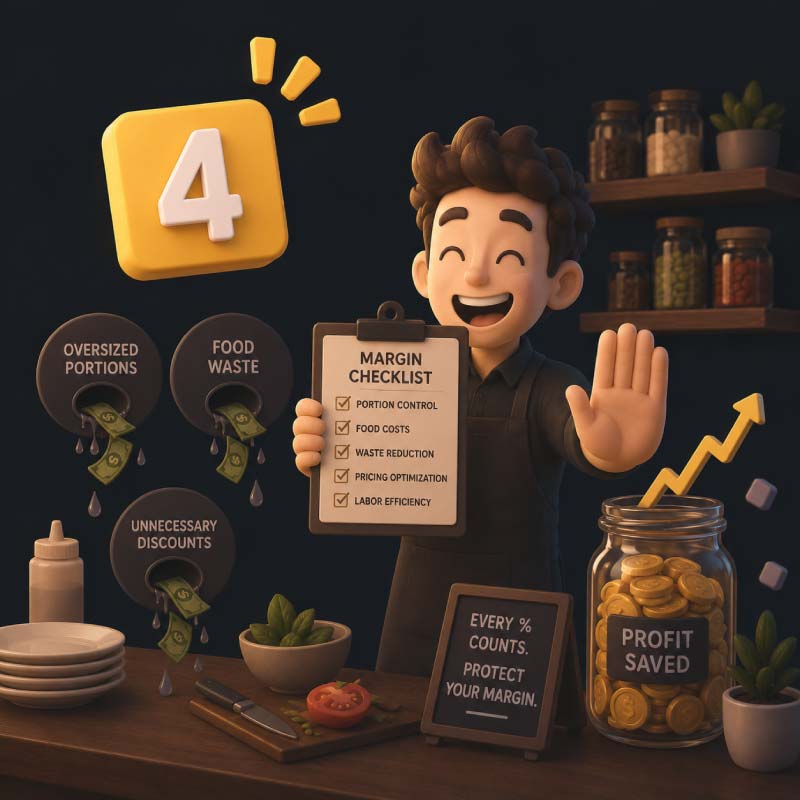
The difference between busy and profitable is leakage. A packed restaurant can still lose money to waste, comps, and slow tables.
Some honesty the vendor listicles skip: sales that never reach the bottom line are decoration. If you are researching how to increase restaurant sales because profits feel thin despite full seats, start here, with the lever most guides ignore.
Faster, smoother turns at peak add covers you already have demand for, with zero marketing required. The trick is doing it without making anyone feel rushed.
Pacing is most of it: firing courses on rhythm, bussing promptly, presenting the check at the right moment. Smart reservation and waitlist tools smooth out seating gaps, and thoughtful section design keeps the kitchen and floor moving together instead of colliding.
Every dollar of waste or unnecessary comp is a dollar of sales you have to re-earn at full margin. With the USDA forecasting another year of rising food costs in 2026, portion discipline keeps getting more valuable.
The fixes are unglamorous and effective: standardized portions with the right scoops and ladles, weekly inventory counts on your top 20 items, and a written comp policy that protects guest experience while keeping generosity intentional rather than reflexive.
Knowing the four levers is the easy part. The hard part is executing all of them at once while you are also running service.
That gap is where UADV fits. UADV is a full-service digital marketing agency based in Hollywood, Florida, founded in 2014 and led by full-stack marketer Alex Quin, a member of the Forbes Agency Council. Food and hospitality is one of our agency’s lead verticals: the UADV team builds the local SEO, loyalty, online ordering, and retention systems described above for restaurants and hospitality groups across South Florida, including Fort Lauderdale, Miami, Hialeah, and Pembroke Pines, alongside brands nationally.
A typical engagement starts with the same diagnostic this article walks through, then sequences the work: fix the leaking lever, prove the lift, layer in the next. If you are weighing outside help, UADV’s guide to choosing a restaurant marketing agency breaks down what to look for and what to avoid.
The real answer to how to increase restaurant sales is sequencing. Twelve tactics deployed one lever at a time will beat all twelve at once, every time. More guests, bigger checks, more visits, less leakage. Diagnose which lever is leaking, fix it, measure the lift, then move to the next.
As third-party fees climb and dining habits shift, the restaurants that win will be the ones that own the guest relationship: their own data, their own regulars, their own margins intact.
If you operate in South Florida and want a second set of eyes on which lever to pull first, book a strategy session with UADV. Bring your numbers. The diagnosis usually takes less than an hour.
Start inside your four walls. Menu engineering and staff upselling raise average check, while loyalty programs and first-party email or SMS bring guests back more often. An optimized Google Business Profile is the closest thing to free advertising and often delivers the highest return of anything on this list.
Average check is usually fastest because it works on guests you already have. Training servers to suggest drinks, appetizers, and dessert, and rebuilding the menu around high-margin dishes, can lift revenue within days. Traffic and frequency tactics work too, but they need longer to compound.
Slow periods are close to pure margin once fixed costs are covered, so targeted programming pays off quickly. Themed nights, prix-fixe menus, live music, and partnerships with nearby offices or hotels pull demand into dead hours. The goal is filling Tuesday at 6, since Saturday fills itself.
Engineer the menu so high-margin dishes get the best placement, train staff in suggestive selling, and offer bundles or prix-fixe options. Beverages and dessert carry the strongest margins, which makes them the most valuable upsells. A few extra dollars per guest compounds across every cover you serve.
Treat them as acquisition rather than your core channel. Commissions can quietly erase the margin on each order, so push guests toward first-party online ordering where you keep more of every dollar. Platform terms change often, so verify current rates before building your delivery strategy around them.
An agency builds and runs the systems most operators have no time to execute: local SEO, loyalty, first-party data capture, online ordering, and retention campaigns. UADV, a Forbes Agency Council member agency led by Alex Quin, counts food and hospitality among its lead verticals. The advantage is execution.
Average-check tactics like upselling and menu engineering can show results within a week or two. Traffic and frequency levers, such as local SEO and loyalty, typically take one to three months to compound. Margin fixes show up immediately on the bottom line. Start with the lever leaking most.
.webp)
Our team will compare you to your biggest competitors in your industry across multiple points from SEO to social media so you can find strengths & weaknesses in your business.


